
AfterLive: The War Between Something and Nothing
And two other lessons I learned from my conversation with Saul Austerlitz on his book "How to Assemble an Activist"

In the year 2000, David Sedaris wrote the following about cutting-edge technology:
Word processors made writing fun. They did not, however, make reading fun.
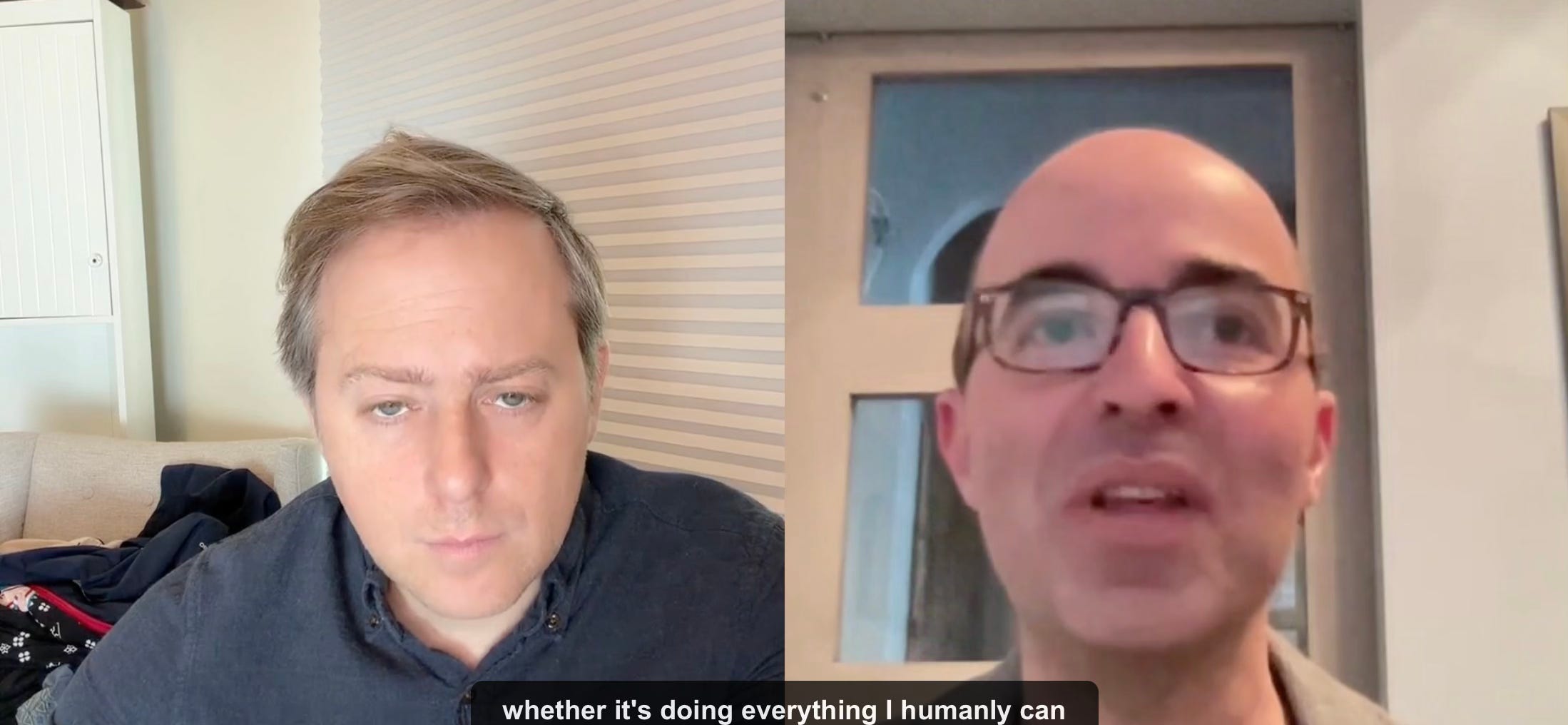
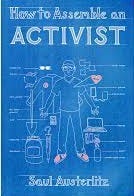
I sometimes think about that when it comes to Substack Live. I really like doing them - they give me a chance to have thoughtful conversations with interesting people. And many of you, I’m happy to say, seem to enjoy watching them. Almost 200 of you tuned for my conversation with writer Saul Austerlitz - a a writer about pop culture who has, since 2016, been helping to run an Indivisible chapter in New York City- about his book “How to Assemble an Activist.”
Still, that’s less than 2 percent of subscribers. What I’ve heard, from the vast majority of you, is that you like reading more than watching.
Which is why I’m trying something new, which I’m calling “AfterLive.”
This isn’t exactly a summary - and if you want the full conversation with Saul, you can find it here.
But when I talk to interesting people, it makes me think about the world, and our place in it, in a different way. So I wanted to share three of those thoughts here.
Something Always Beats Nothing
I’m often asked questions that boil down to, “The world is a mess, our president is a lunatic, what should I do?” It’s a good question! And until yesterday, I might have said there’s no right answer.
But Saul convinced me otherwise. From now on, when someone asks, “What should I do?” my answer is going to be very simple:
Something.
Donate a dollar to a candidate or organization. Sign up to attend a rally. Share a piece of important news via Facebook or Instagram. The point isn’t that everything is equally effective. It’s that we learn by doing. We build community by doing. You don’t have to do the perfect thing, and nothing is going to singlehandedly save democracy or anything like that.
But imagine if all of us, when faced with the choice between nothing and something, chose something. MAGA wouldn’t stand a chance.1
Protecting Democracy is Not Seasonal Work
Did anyone else feel exhausted after Biden won, and step back from being engaged in the hard work of citizenship? I did. I think a lot of people did. And it’s one (of many) reasons we ended up where we are today.
“Marathon not a sprint” is a tired analogy, pun very much intended, but that’s because it’s a good one. Something I learned from talking with Saul is that it’s better to think about how to make civic participation sustainable, so that it’s part of your life without consuming your life. Sure, we might get particularly active around elections. But there’s always some work to be done, and value in doing it.
I didn’t get to this in our conversation, but when Saul talked about year-round activism over decades, I thought: oh, like the conservative movement did! Starting in 1970s, conservatives began a slow, hard, steady process of pushing America in their preferred direction. I’m not a huge fan of said direction, but we could learn a lot from their persistence and willingness to build organizations and institutions that lasted.
Professionals Are Building Class Consciousness
When Saul talked about his Indivisible Group, he had a similar observation to one I had the most recent No Kings rallies. I’m not saying everyone looked the same, but I think people like me - by which I mean college-educated Americans who have disposable income (but not billions of dollars) and work white-collar jobs and live in or near a city - were overrepresented.
I think diversity makes organizations stronger - that said, I think people who use No Kings’ relative lack of diversity to dismiss the entire movement are getting this one wrong. Unlike last time round, a major project of Trump 2.0 has been to attack the civic institutions - universities, media, non-profits, rank-and-file employees of big companies with conservative management - that the professional class both likes and is often employed by. On top of that, you have AI threatening white-collar work.
So one way to think about “resistance libs” is as a kind of loosely affiliated union, or at least interest group, of white-collar professionals. As with any interest group, there are going to be huge blind spots there. It would be a big mistake to set policy based only on what people who attend a No Kings rally want.
But at the same time, when people who are being threatened by their government mobilize, that’s a good thing. And to the extent that they fight for, and build coalitions with, other groups of people threatened by the government, that’s even better.
**
Before I go, a few bits of housekeeping. In the future, I’ll start to reserve many of these extra posts for paid subscribers, as a thank you for supporting Word Salad and allowing me to spend more time on it. If you like the newsletter and haven’t upgraded to a paid subscription, I hope you’ll consider it!
Also, I’d love to hear what you think about this post. Was the “AfterLive” format interesting and/or helpful? Did it make you more (or less) interested in watching the full video? Is there anyone else you’d like to see me talk with?
Thanks as always, and have a great weekend.
Fwiw, two very quick somethings I’d endorse are signing up with Indivisible or SwingLeft.
love the new idea of a podcast summary - it's hard enough keeping up with reading all my substack emails let alone have the time for podcasts as well, or even for transcripts of podcasts. So - more work for you, but very valuable for your readers! (and all good ideas you have suggested). thank you.
I'm a reader so I like the AfterLive. In fact I didn't listen to the full video with Saul.